Clue Cycle & Period Tracker
Clue Period Tracker by BioWink
Screenshots
About this app
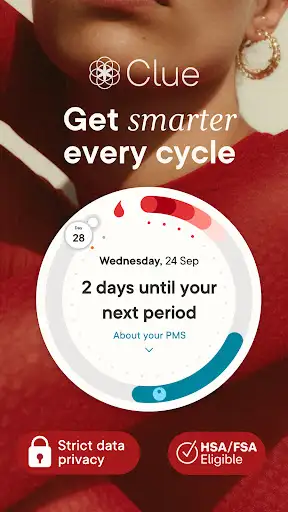
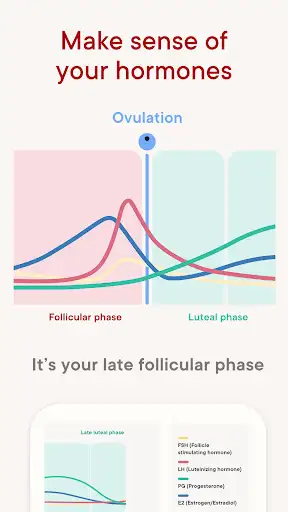
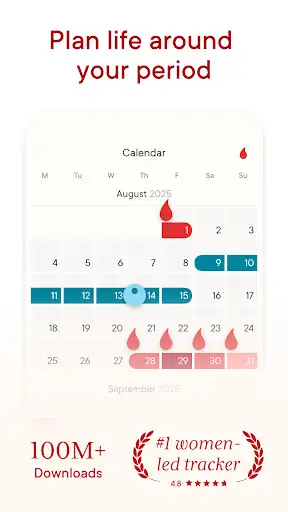
Clue is a period and cycle app built to help you actually understand your body instead of guessing. You log your flow, mood, sleep, sex, meds, basal body temperature, and dozens more signals. The app then turns that mess of inputs into readable patterns — not magic, just math and a lot of testing. Use it to watch cycles, get pill reminders, track pregnancy week-by-week, or as a data-backed way to spot irregularities like PCOS or perimenopause shifts. Short version: It works—mostly. The interface is a clean calendar first. Tap a day, add symptoms (I swear the “cramps” icon gets clicked more than any other), and Clue stitches that into predictions. Connect wearables (Oura, WHOOP, Fitbit, etc.) to pull in sleep, temperature, and heart-rate trends. Add BBT for tighter ovulation windows when you’re trying to conceive. There are 300+ guides inside — short reads written by clinicians and midwives — and the app flags when your cycle may be out of its usual pattern so you can take that to a provider. “Is it accurate?” someone asks. “Depends,” the app would say if it could talk back. In practice, people with regular cycles get tighter predictions. If your cycle flips you around monthly (hi, stress/shift work), expect fuzzy fertile windows unless you add BBT and consistent inputs. Pause. I logged mood and sleep for three months and actually noticed my energy tanked two days before flow—who knew? That quiet pattern saved me from scheduling heavy meetings on my worst mornings. Not that Clue will solve everything. It won’t replace a doctor, and it’s explicitly not a contraception guarantee. But if you want a privacy-minded, female-led tracker that grows smarter the more you use it, Clue is a solid pick.
Editor's Review
I’ve used Clue on and off for years—long enough to rant about UI tweaks and to praise the days when predictions actually landed right. I like that Clue doesn’t shove flashy nonsense at you; it asks for data and then gives you answers. I tracked basal body temp for two cycles and yes, that extra data point tightened up the ovulation window in a way that felt...real. I got a little giddy. Then annoyed—because sync with my wearable hiccuped mid-cycle and I had to re-enter temperatures by hand (ugh). A quick chat I had with a friend sums it up: “You getting predictions?” I asked. “Mostly,” she said. “But not perfect—yet.” That’s fair. The free layer gives you a reliable calendar and symptom logging. The paid tier (Clue Plus) unlocks advanced analysis and deeper cycle modeling. If you’re on a tight budget, know where Clue draws its paywall. What I’ll nitpick: prediction consistency for irregular cycles could be better, and the app sometimes nudges you toward subscription features in ways that feel clumsy. Still, their privacy stance (GDPR-level protections) and the sheer amount of clinical content inside keep me using it. It’s not flawless. It’s usable, honest, and—when it works—actually helpful. That’s rare enough these days.
Pros
- Clean calendar view that makes spotting cycle patterns obvious at a glance
- 300+ clinician-written guides for pregnancy, fertility, and cycle health
- Wearable sync (Oura, WHOOP, Fitbit) and BBT support for tighter ovulation tracking
- Strong privacy protections and women-led development team
Cons
- Predictions can be off for highly irregular cycles unless you add consistent BBT data
- Occasional sync hiccups with wearables that require manual fixes
- Some valuable analytics are behind the subscription paywall
Additional Information
You May Also Like