Trading Legend
37GAMES Interactive Entertainment
Screenshots


About this app
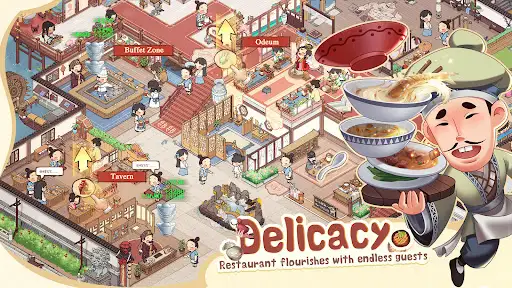
Trading Legend drops you into Bianliang — a crowded, noisy, ink-brushed city where your pockets and wits decide if you fail or flourish. You start as a no-name shopkeeper. You learn the ropes: set prices, hire retainers, balance capital in the bank, update the inn's menu, treat patients at the infirmary, and risk caravans on the Silk Road. The controls are touch-friendly: tap shops, assign staff, swipe through supply lists. Not rocket science — but it demands attention. Keep cash moving. Don't let money nap. Short answer: it's busy. Like, constantly busy. Dialogue: 'Customer: "Where's the bubble tea?"' — yes, bubble tea shows up (and yes, I rage-ordered ingredients once). The game blends role-playing with tycoon mechanics: reputation matters, and so does honesty in the infirmary (treating folks badly costs you more than coins). Guilds let you team up for international trade runs; expect market shocks, bad weather, and salty rivals who outbid you at the port. Mechanics detail: banking uses capital flow rather than passive interest — you must assign retainers to protect routes and manage ledgers; inns need daily menu tweaks to match tastes; the infirmary has a basic recipe system (herbs + technique = cures) that rewards experimentation. Global trade is a risk-reward loop: buy low, sell high, and pray a caravan doesn't get waylaid. Visuals are hand-painted, with layered pavilions and crowd scenes that feel like a moving scroll. Who should play? People who like slow builds, price math, and stories told through NPC chatter. This is not a pick-up-and-forget arcade. Don't expect instant thrills — expect a living market that punishes laziness and rewards clever moves. (Also: bring snacks. Your thumbs will be busy.)
Editor's Review
I played this game late at night, for two straight nights, because it kept pulling me back — not because it spoon-fed me dopamine. I got stuck on a caravan contract twice (two hours of head-scratching and miserable loss), and I loved every second of the argument in my head about whether to spend coins to speed things up. Real talk: the pacing isn't for people who want instant wins. It's for those who like to tweak menus at dawn and then check prices again at dusk. Dialogue: 'Friend: "You still playing that old-timey merchant thing?" Me: "Yeah. It's got feelings, okay?"' That weird sentence actually sums it up — the game talks to you through small details: a retainer's mood, a vendor's rumor, a price spike after a festival. Some systems feel shallow at first — the infirmary's potion recipes could use more depth — and yes, there are occasional UI hiccups when the market list lags during big events. But the artwork (the scrolling city scenes) and the guild-run Silk Road missions carry weight. They make losses feel like lessons instead of punishment. I wish there were clearer early-game guidance. I wish the caravan fail-states were less swingy. But don't let that scare you off — if you like fiddly economy sims with personality and a little bite, this will keep you honest. I got mad. I got thrilled. I went back the next night. That's my verdict.
Pros
- Striking hand-painted visuals that feel like a moving scroll painting
- Deep trade systems with meaningful risk — guild caravans actually matter
- Varied shop types (inn, infirmary, bank) that force different playstyles
- NPC chatter and neighborhood detail make the city feel lived-in
Cons
- Early tutorials are thin — expect a rough first hour of learning
- Caravan outcomes can swing wildly; luck sometimes overshadows strategy
- Infirmary crafting feels underdeveloped compared to other systems
- Occasional UI lag during heavy trade events on lower-end devices
Additional Information
You May Also Like